
#23 Why Was French the Language of Diplomacy?
Izumi Miyajima French Forest
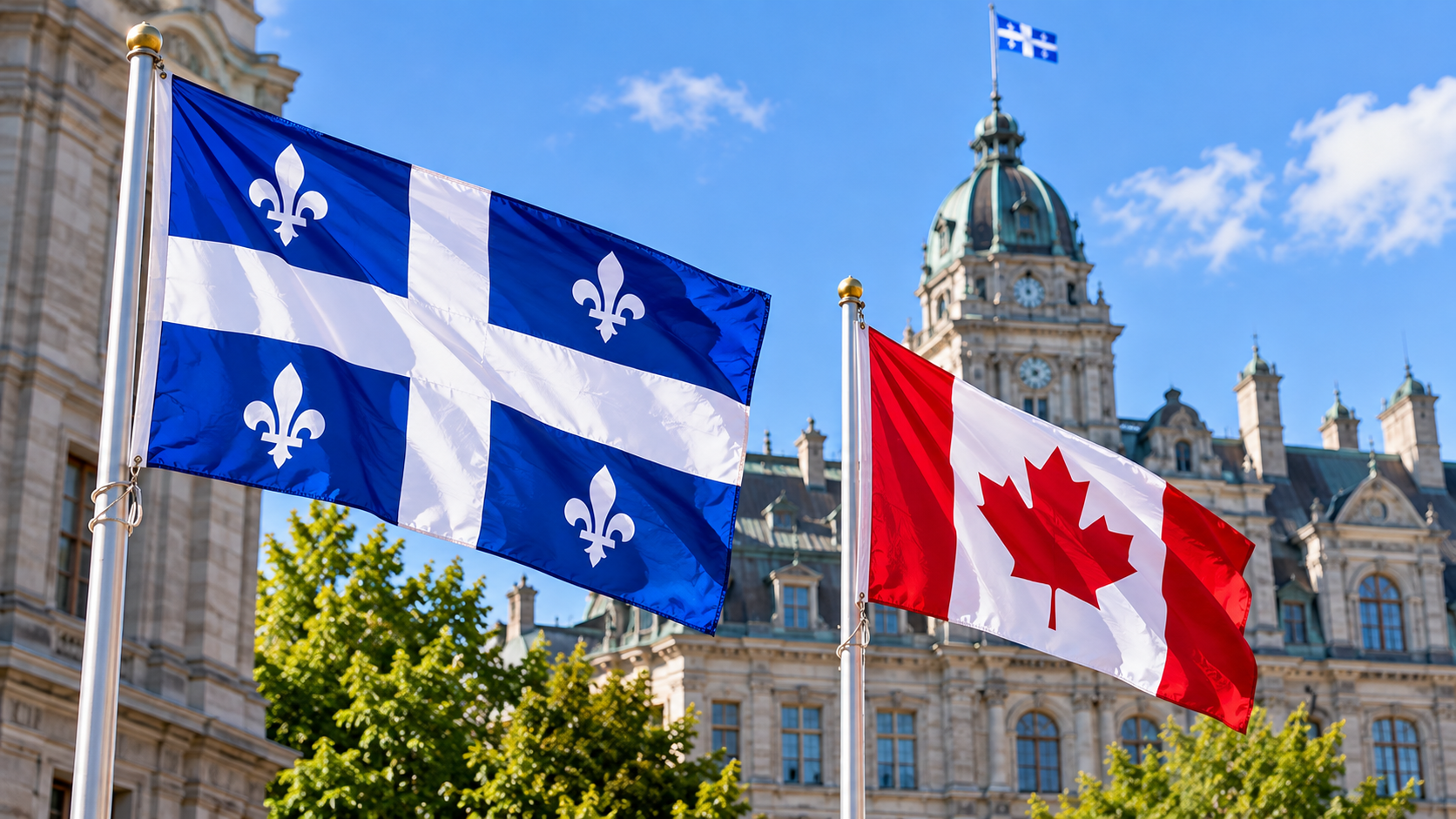
Located in eastern Canada, Quebec is one of the major centers of French-speaking culture in North America.
Canada has two official languages at the federal level, English and French, while Quebec has established French as its sole official language.
The variety of French spoken in Quebec is generally known as Quebec French (français québécois). Although it shares much of its grammar and vocabulary with the French spoken in France, it has developed distinctive pronunciation patterns and expressions.
Its history dates back to French exploration of North America in the sixteenth century and the establishment of French settlements in the seventeenth century.
Over time, British rule, contact with English, and changes in social institutions contributed to the development of the distinctive characteristics of Quebec French.
In this article, I will explain the history of the French language in Quebec, Canada, tracing its development chronologically from French settlement to modern language policies.
The history of French in Quebec dates back to the sixteenth century, when French explorers began exploring North America.
In 1534, the explorer Jacques Cartier crossed the Atlantic Ocean under the authority of King Francis I of France and reached what is now eastern Canada.
During his subsequent voyage in 1535, Cartier traveled up the St. Lawrence River and explored areas around present-day Quebec City and Montreal.
At that time, various Indigenous peoples already inhabited the region, each with their own languages and cultures.
The name Canada is believed to derive from kanata, a word meaning “village” or “settlement” in St. Lawrence Iroquoian, an Indigenous language spoken by people Cartier encountered in the St. Lawrence River region.
In the seventeenth century, France began establishing permanent colonial settlements in North America.
In 1608, the explorer Samuel de Champlain established a settlement at Quebec along the St. Lawrence River. The settlement developed as a center for activities such as the fur trade and eventually became the foundation of present-day Quebec City (Ville de Québec).
In 1642, another settlement, known as Ville-Marie, was established by Paul de Chomedey de Maisonneuve and his associates. Ville-Marie subsequently developed into present-day Montreal (Montréal).
As these settlements expanded, people arriving from France began establishing permanent communities along the St. Lawrence River.
French gradually became established as one of the principal languages of the region through the domestic lives, commercial activities, and religious practices of the settlers.
Thus, French exploration in the sixteenth century and the establishment of settlements in the seventeenth century marked the beginning of the French-speaking culture that remains deeply rooted in Quebec today.
From the seventeenth to the eighteenth century, a vast territory that included present-day Quebec formed part of the French colony known as New France (Nouvelle-France).
During this period, settlers from various regions of France crossed the Atlantic and established communities, particularly along the St. Lawrence River.
Between 1663 and 1673, many women also traveled to North America with the support of the French Crown as part of efforts to encourage marriage and permanent settlement in the colony.
These women were known as the Filles du roi, meaning “King’s Daughters,” and played an important role in marriage, family formation, and population growth in the colony.
As the number of families increased and more children were born and raised in the colony, French began to be transmitted from one generation to the next through everyday family life.
At the time, different languages and regional dialects were spoken throughout France. Settlers arriving in New France came from various regions, including the Paris area, Normandy, and Poitou.
Through interaction among people from these different regions, a common form of French developed, largely based on the French spoken around Paris.
At the same time, it incorporated linguistic characteristics from various regional varieties, gradually developing into a distinctive form of French centered on the St. Lawrence River region.
This became the linguistic foundation of modern Quebec French.
By the middle of the eighteenth century, tensions between France and Britain in North America had intensified.
The two countries were competing over territorial expansion and activities such as the fur trade. During the Seven Years’ War, which began in 1756, intense fighting took place not only in Europe but also in North America.
In 1759, British forces defeated the French at the Battle of Quebec, and Montreal surrendered to British forces the following year.
In 1763, under the Treaty of Paris, France ceded most of its North American territories, including Canada, to Britain.
As a result, political control of Quebec passed from France to Britain, and the influence of English gradually expanded in areas such as administration and commerce.
Nevertheless, a large French-speaking population was already established in the region, and French continued to be used in family life, religious activities, and local communities.
The Catholic Church, in particular, played an important role in preserving the region’s language and culture through religious activities and education conducted in French.
The British government also began taking certain measures to accommodate the religious practices and legal traditions of Quebec’s predominantly French-speaking population in order to maintain stable colonial administration.
One important example was the Quebec Act, enacted by the British Parliament in 1774.
This legislation permitted the practice of the Catholic faith, restored French-derived civil law, and opened the way for Catholics to hold public office.
Although the Quebec Act did not establish French as an official language, it played an important role in preserving the religious and social institutions of the French-speaking population.
In 1791, the colony was divided into Upper Canada and Lower Canada. In Lower Canada, which broadly corresponded to present-day Quebec, French speakers continued to constitute the majority of the population.
Thus, French remained firmly established in everyday life and local communities under British rule, allowing Quebec’s distinctive linguistic culture to continue developing.
Following the beginning of British rule, French in Quebec developed within a social environment that differed from that of metropolitan France.
In France, efforts to promote linguistic uniformity intensified following the French Revolution in the late eighteenth century.
Particularly during the second half of the nineteenth century, the expansion of public education and the development of administrative institutions contributed to the spread of standardized French throughout the country.
In Quebec, meanwhile, vocabulary and pronunciation patterns inherited from the French colonial period continued to be preserved within local communities, while distinctive linguistic changes also took place.
As a result, modern Quebec French contains both expressions inherited from older forms of French used in France and expressions that developed independently in North America.
For example, in France, the word voiture is generally used to mean “car,” whereas char is also widely used in everyday conversation in Quebec.
The word char has existed in French for centuries and originally referred to vehicles such as carts and chariots.
Another example concerns the expression “to go shopping.”
In France, expressions such as faire du shopping and faire les magasins are commonly used. In Quebec, however, the verb magasiner is used with the meaning “to go shopping.”
Meal names also differ between the two regions.
In France, breakfast is generally called petit-déjeuner, lunch is déjeuner, and dinner is dîner.
In Quebec, by contrast, breakfast is commonly called déjeuner, lunch is dîner, and dinner is souper.
The meal names used in Quebec preserve traditional French usage, and similar terminology is also found in parts of Belgium and Switzerland.
Quebec French has also developed vocabulary closely associated with the natural environment and everyday culture of North America.
A representative example is vocabulary related to maple syrup.
Maple syrup, which is produced by boiling down the sap of maple trees, is called sirop d’érable in French.
In Quebec, a facility where maple sap is processed into maple syrup and related products is known as a cabane à sucre.
During the spring maple-sap harvesting season, people traditionally visit these establishments to enjoy meals featuring maple syrup. This custom has become one of the characteristic elements of Quebec’s food culture.
In this way, Quebec French has developed vocabulary and expressions closely connected to the region’s natural environment and everyday culture while retaining a linguistic foundation shared with French in France.
Contact with English has also played a significant role in the development of Quebec French.
Following the establishment of British rule in 1763, English gradually gained influence in Quebec, particularly in administration and commerce.
As industrialization progressed during the nineteenth and twentieth centuries, English became increasingly important in business management, factories, and commercial activities.
In this environment, French speakers encountered English more frequently through their work and everyday lives, and words and expressions of English origin gradually entered Quebec French.
For example, the English-derived word job is sometimes used in everyday Quebec French to mean “work” or “a job.”
Similarly, fun, borrowed from English, is also used. The expression C’est le fun ! means “It’s fun!”
At the same time, the growing influence of English encouraged efforts to preserve and develop French vocabulary.
For example, parking is commonly used in France to mean “parking lot,” whereas stationnement is widely used in Quebec.
Another well-known example is courriel, a French term for “email” that became established in Quebec.
Derived from courrier électronique, the word is now also used in other French-speaking regions, including France.
Thus, contact with English contributed both to the introduction of borrowed vocabulary and to efforts to develop French alternatives.
By the middle of the twentieth century, Quebec was undergoing major social and political changes.
One particularly important development was the period of social reform known as the Quiet Revolution (Révolution tranquille), which took place during the 1960s.
The Quiet Revolution gained momentum under the government of Jean Lesage, which came to power in 1960.
Before this period, the Catholic Church had played a major role in Quebec society, particularly in education, healthcare, and social welfare.
During the Quiet Revolution, however, the provincial government expanded its responsibilities, introducing educational reforms, developing healthcare and social welfare systems, and reviewing economic policies.
This period also saw growing efforts to improve the economic and social position of French speakers.
Although French speakers constituted the majority of Quebec’s population, English held considerable influence in areas such as corporate management, senior administrative positions, and commercial activities.
Consequently, creating a society in which French speakers could enjoy greater opportunities in education, employment, and economic life became an important objective.
In response, the provincial government expanded educational opportunities and increased its involvement in economic development, seeking to create conditions that would allow French speakers to pursue careers in professional and managerial fields.
Language policies were also reconsidered to promote the use of French in a broader range of settings, including administration, workplaces, and education.
In 1969, Bill 63 was enacted. This legislation recognized freedom of choice regarding the language of schooling while also seeking to promote French-language education.
In 1974, the Official Language Act (Loi sur la langue officielle), commonly known as Bill 22, was enacted, formally establishing French as Quebec’s official language for the first time.
These reforms marked a major turning point in efforts by Quebec’s population to place its language and culture at the center of society.
The social reforms and language policies introduced during this period ultimately paved the way for the adoption of the Charter of the French Language in 1977.
One of the most significant events in the history of French in Quebec was the adoption of the Charter of the French Language in 1977.
Known in French as the Charte de la langue française, the legislation is commonly referred to as Bill 101 (Loi 101).
It was introduced under the government of René Lévesque, with Camille Laurin, the minister responsible for cultural development, playing a central role in its preparation and adoption.
The legislation was adopted on August 26, 1977, establishing French as Quebec’s sole official language.
Its purpose was to promote the use of French and strengthen its position across various areas of society, including administration, education, employment, and commerce.
At the time, French speakers constituted the majority of Quebec’s population, but English continued to exercise considerable influence in business and economic activities.
Establishing a society in which French could be widely used not only in everyday life but also in workplaces and public services was therefore an important objective.
The Charter of the French Language introduced measures to promote the use of French in businesses.
When the legislation was first enacted, companies with 50 or more employees were among those required to implement measures designed to expand the use of French in the workplace.
Regulations were also introduced concerning commercial signs and advertising. Under the original legislation, the use of French alone was generally required.
These rules were subsequently revised through court decisions and legislative amendments. Today, other languages may also be used under specified conditions.
In education, the legislation established a system in which children would generally attend French-language schools, while admission to English-language schools was subject to certain conditions.
In particular, the legislation expanded opportunities for children from immigrant families to receive education in French.
This helped establish a framework through which people from diverse linguistic backgrounds could participate in Quebec society using French.
Through these measures, French came to play an increasingly important role not only in administration and education but also in workplaces and commercial activities.
The Charter of the French Language has subsequently been amended in response to changing social conditions and judicial decisions, while continuing to serve as a central foundation of Quebec’s language policies.
Today, French is used across a wide range of areas in Quebec society, including administration, education, business, media, and cultural activities.
In Quebec City and many other parts of the province, French serves as the principal language of everyday communication and public services.
Quebec has also developed a distinctive French-language culture encompassing literature, cinema, music, television, and other forms of artistic expression.
These cultural activities help spread Quebec French vocabulary and expressions while transmitting the region’s linguistic characteristics to future generations.
At the same time, Quebec is located in North America, where English is widely spoken, and contact between the two languages remains extensive.
Montreal, the province’s largest city, is particularly multilingual. In addition to French and English, languages such as Arabic, Spanish, and Chinese are spoken by communities with diverse immigrant backgrounds.
Within this multilingual environment, the Quebec government continues to pursue language policies designed to maintain French as the common language of society and to enable residents from different linguistic backgrounds to participate in social life through French.
In 2022, Bill 96 was enacted to amend the Charter of the French Language.
The amendments explicitly reaffirmed French as Quebec’s sole official language and its common language.
They also strengthened provisions concerning the use of French in business activities, administrative services, and commercial signage, with various regulatory changes being implemented in stages.
Further efforts have also been undertaken to help residents, including immigrants, learn French and use it in everyday life and employment.
Thus, modern Quebec continues to develop language policies that place its historically inherited French language at the center of society while responding to the realities of a culturally and linguistically diverse population.
The French language in Quebec, Canada, has developed distinctive characteristics over a long historical period, beginning with French settlement in the seventeenth century.
Its history can be summarized as follows:
Quebec French is a variety of French shaped by the combination of linguistic characteristics inherited from France and the historical and cultural influences of North America.
Understanding its history provides deeper insight into how the French language has evolved across different regions and social environments, giving rise to a rich diversity of expressions.