#21 What Is Verlan in French?
Izumi Miyajima French Forest

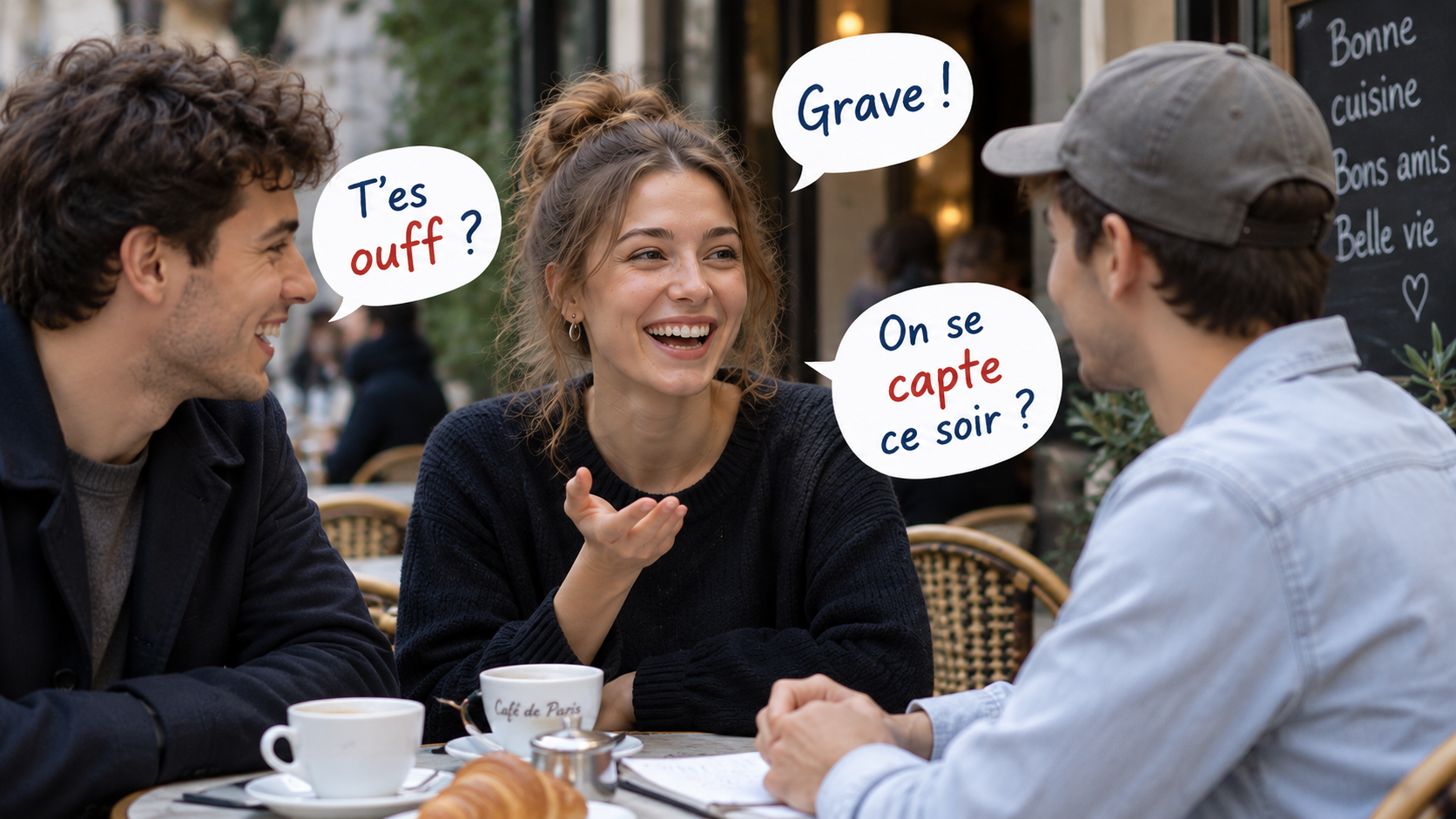
When people meet, they often have a brief conversation about topics such as the weather or their weekend plans before moving on to the main subject. This kind of casual conversation is known as small talk.
Small talk also takes place in a variety of everyday situations in French. In addition, because French distinguishes between tu and vous depending on the relationship between speakers, small talk can also reflect the degree of familiarity and social distance between them.
In this article, I will explain what small talk in French is like, introduce common topics and expressions, and discuss some important points to keep in mind when engaging in conversation.
Small talk refers to brief conversations that are not intended to discuss a particular subject in depth but rather to facilitate communication with others.
For example, asking a colleague about their weekend when you see them at work or talking about the weather when you meet an acquaintance can be considered small talk. The purpose lies less in the content of the conversation itself than in naturally developing an interaction from an initial greeting and facilitating communication with the other person.
In French, you might ask Vous avez passé un bon week-end ? (Did you have a good weekend?) or say Il fait beau aujourd’hui. (The weather is nice today.) to start a conversation.
However, because French distinguishes between tu and vous according to your relationship with the other person, it is important to be aware of social distance even when making small talk. Appropriate topics may also differ depending on whether you are speaking with someone you have just met or a close friend.
For this reason, when learning how to make small talk in French, it is important not only to memorize phrases but also to consider who you are speaking with and in what situation.
Small talk often begins with a greeting followed by a question about how the other person is doing.
For example, Bonjour, ça va ? (Hello, how are you?) is commonly used as an everyday greeting.
You can respond with expressions such as:
Ça va is a very short expression, but it is a useful phrase that can be used both to ask how someone is doing and as part of an everyday greeting.
Adding another question can help you continue the conversation rather than ending it after the initial greeting.
For example, if you meet a colleague at work, you might ask:
In this way, adding a question related to the day, the circumstances, or a topic you have in common after exchanging greetings can make it easier to develop the conversation.
The weather is one of the easiest topics to use for small talk in French.
Because it does not require you to delve deeply into someone’s private life and is easy to discuss even with someone you have just met, it can provide a natural way to start a conversation.
If you want to talk about the season, you can also use expressions such as:
The key is to use the weather as a starting point and gradually move on to other topics that the other person may find easy to discuss, such as the seasons, holidays, travel, or hobbies.
Everyday subjects such as food, hobbies, and how people spend their free time are also useful topics for small talk.
For example, you can ask the following questions about food:
If the other person tells you about a favorite restaurant or dish, you can develop the conversation by asking about their favorite foods or something they have eaten recently.
Similarly, you can ask about hobbies and leisure activities:
In small talk, familiar everyday topics such as food and hobbies can provide a natural starting point for conversation.
One particularly important aspect of small talk in French is choosing appropriately between tu and vous.
Tu is used with people with whom you have a relatively close relationship, such as family members, friends, and close colleagues. Vous, on the other hand, is used when speaking politely and maintaining a certain degree of social distance, such as with someone you have just met, a person in a position of authority, or a professional contact.
For example, when asking about someone’s weekend plans, the following two questions convey the same basic meaning but reflect different levels of familiarity:
In this way, even when asking the same question in French, you need to choose between tu and vous and change the verb form accordingly, depending on the social distance and degree of familiarity between you and the other person. It is therefore important to consider who an expression is being used with when making small talk in French.
If you are unsure whether to use tu or vous with someone, vous is generally the safer choice at first. If the other person subsequently uses tu with you or suggests On peut se tutoyer ? (Shall we use tu with each other?), you can switch to tu depending on the relationship and situation.
Some topics, particularly those involving personal matters, may be better avoided in small talk. For example, depending on the person and situation, asking about the following subjects may be perceived as intrusive or insensitive:
For example, asking someone you have only just met the following questions may, depending on the circumstances, give the impression that you are being too intrusive:
Politics and religion are also topics on which differences in opinions and values can easily emerge. When speaking with someone you have just met or engaging in a professional conversation, it is therefore important to consider your relationship with the other person and the context before discussing such subjects.
In French, small talk about subjects such as the weather, weekends, food, and hobbies often follows an initial greeting.
The main points about small talk can be summarized as follows:
When making small talk in French, it is important to listen to the other person, respond to what they say, and gradually develop the conversation.
By paying attention not only to French phrases but also to the distinction between tu and vous and the choice of appropriate topics, you can communicate more smoothly and appropriately with others.