
#54 French and Art
Izumi Miyajima French Forest

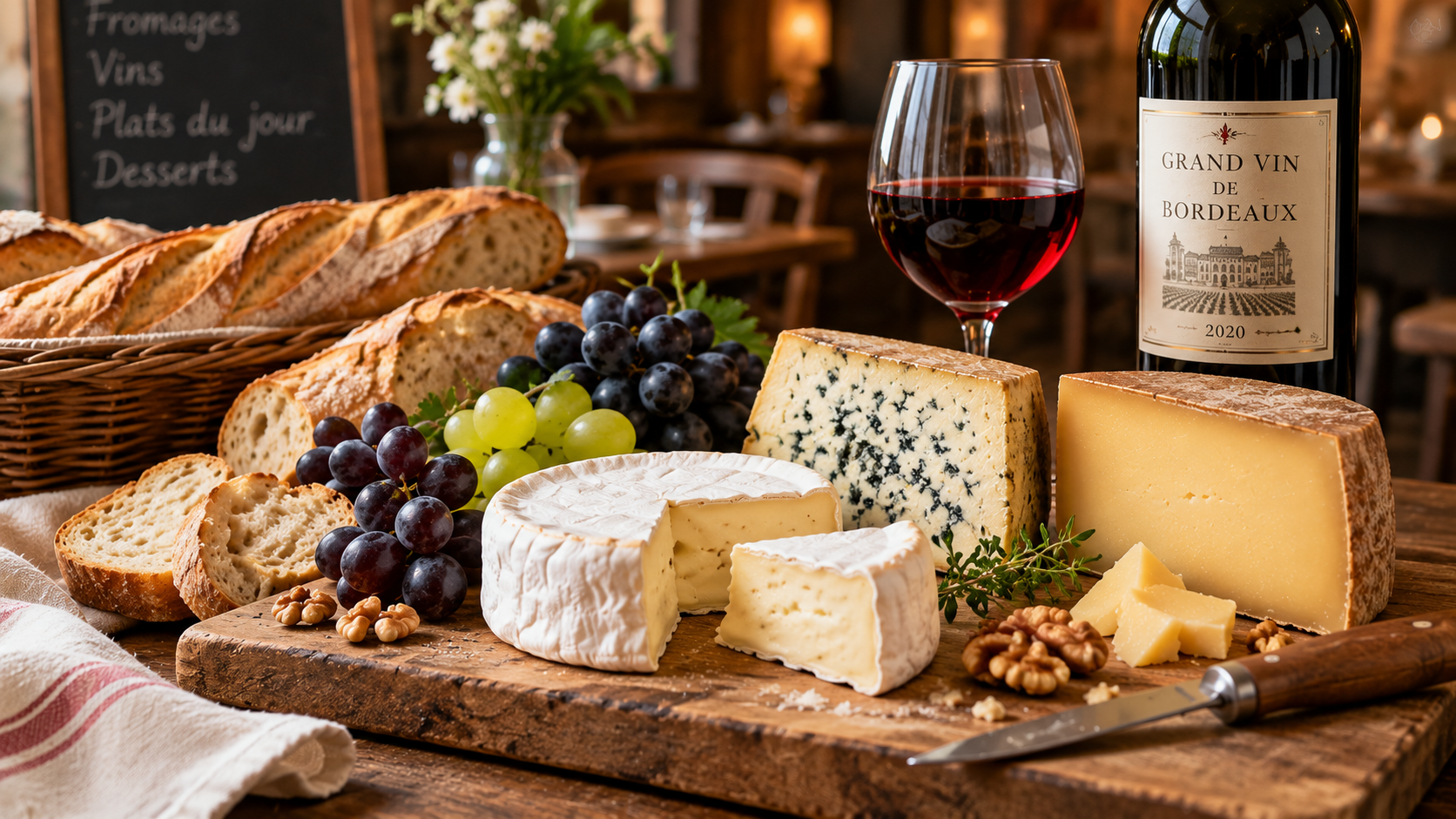
France is one of the countries best known around the world for its culinary culture. In addition to haute cuisine, a wide variety of food traditions have developed, including bread, pastries, cheese, wine, and regional dishes.
This culinary culture is also strongly reflected in the French language. French not only has a rich vocabulary related to cooking and dining, but also includes numerous specialized terms describing techniques for cutting ingredients, methods of cooking, and ways of serving food.
Looking at the French language through the lens of food therefore reveals more than the meanings of individual words. It also provides insight into French history, regional cultures, and everyday life.
In this article, I will explain how the French language and culinary culture have developed in relation to one another, while introducing common culinary terms, historical developments, and regional food traditions across France.
French has a large number of words related to cooking and dining.
Many French culinary terms are also widely used internationally. You may already be familiar with some of the following words:
| French | Meaning |
|---|---|
| cuisine | cooking, cuisine |
| chef | head chef |
| menu | set menu, meal |
| entrée | starter, first course |
| hors-d’œuvre | appetizer, hors d’œuvre |
| à la carte | ordered individually from the menu |
| sauté | sautéed |
| purée | purée |
| soufflé | soufflé |
| pâté | pâté |
One of the most common French culinary terms is cuisine. In addition to “cooking” or “cuisine,” cuisine can also mean “kitchen.”
There is also the verb cuisiner, meaning “to cook.”
When referring to a particular dish, however, the word plat is commonly used. For example, Ce plat est délicieux. means “This dish is delicious.”
In this way, cuisine can refer broadly to cooking as an activity or to a particular culinary tradition, whereas plat refers to an individual dish served as part of a meal.
When talking about meals in French, the following words are also commonly used:
Learning culinary vocabulary not only helps when ordering at a restaurant but also makes it easier to talk about meals at home, describe food, and express opinions about dishes in French.
The long history of French cuisine is one of the reasons why the French language came to have such a significant presence in the culinary world.
Particularly from the early modern period onward, food at the French court and among the aristocracy came to serve not merely as a means of satisfying hunger but also as a way of displaying power, wealth, and a refined way of life.
Elaborate dishes were already served at banquets held by royalty and the nobility in medieval France. By the seventeenth century, however, culinary practices began to change while continuing to draw on traditions inherited from the Middle Ages. Changes occurred in the use of spices and combinations of ingredients, while new methods of cooking and seasoning involving ingredients such as butter and herbs developed.
Court culture also flourished around the Palace of Versailles during the reign of Louis XIV. Large banquets were held at court, where importance was placed not only on the food itself but also on how dishes were arranged on the table and on dining etiquette. Meals were both a means of displaying royal and aristocratic authority and an important form of social interaction within court society.
As the culinary culture of the court and aristocracy developed, the skills of professional cooks also became increasingly refined.
In the seventeenth century, the French cook François Pierre de La Varenne published Le Cuisinier françois. Cookbooks such as this helped organize contemporary recipes and cooking methods in written form, allowing them to be transmitted to later generations.
From the eighteenth to the nineteenth century, the social changes associated with the French Revolution also affected culinary culture. Some cooks who had previously worked for royalty and the aristocracy sought new forms of employment, a development that coincided with the growth of restaurant culture in urban areas.
In the nineteenth century, chefs such as Antonin Carême further systematized French cuisine by organizing dishes, sauces, and menus. This process was later developed further by figures such as Auguste Escoffier and had a major influence on modern French cuisine and restaurant culture.
However, it would not be accurate to assume that everything now regarded as “French cuisine” originated in court cuisine.
France has long had distinctive regional food traditions. In both rural communities and towns, ordinary people prepared dishes using locally available meat, fish, vegetables, grains, dairy products, and other ingredients. Many dishes now regarded as representative of French cuisine originally developed as regional or home cooking.
French cuisine can therefore be understood as the result of interaction between the refined culinary traditions developed at court and among the aristocracy and the everyday food traditions passed down across different regions of France.
The word restaurant is also of French origin.
The French verb restaurer originally carries meanings such as “to restore” or “to revive.” In eighteenth-century France, the word restaurant was used to refer to nourishing foods believed to restore strength, particularly broths made from meat and other ingredients.
Over time, establishments serving such foods also came to be called restaurants, and the word gradually developed into the modern term for a dining establishment.
Of course, establishments where people could pay for prepared food did not first appear in eighteenth-century France. Inns and taverns had already served meals before this period, and similar establishments had existed for centuries in regions outside Europe as well.
In the second half of the eighteenth century, however, a different type of dining establishment developed in Paris. Rather than simply eating the same meal at a fixed time, customers could select from several dishes and dine at individual tables. This model more closely resembled the modern restaurant.
Through the social changes surrounding the French Revolution and the development of urban culture during the nineteenth century, restaurants became an established part of Parisian food culture. They developed not simply as places where food was served, but as establishments where customers could select dishes and enjoy meals accompanied by service. This development contributed to modern restaurant culture.
The fact that the French word restaurant is now used in English and numerous other languages also illustrates the international influence of culinary culture that developed in France.
In English and Japanese, chef generally refers to a professional cook.
In French, however, chef fundamentally means a “head,” “person in charge,” or “leader.” The word ultimately derives from the Latin caput, meaning “head,” and developed as a term for someone who leads a group or organization.
As a result, chef is used in French in many contexts unrelated to cooking.
Even in the culinary world, chef de cuisine refers not simply to “a person who cooks,” but to the person responsible for managing the kitchen.
The French words for “cook” are cuisinier and cuisinière.
Cuisinier refers to a male cook, while cuisinière refers to a female cook. By contrast, a chef de cuisine is the person responsible for overseeing both the cooking and the staff in a kitchen.
Thus, while chef has a broad range of meanings in French, in English it is primarily used to refer to a professional cook.
The word menu spread from French into languages around the world. However, its use in French differs somewhat from the way menu is commonly used in English.
In English, a menu generally refers to the list of food and drinks available to order at a restaurant.
In French restaurants, however, the list of dishes and drinks that can be ordered individually is called la carte, while le menu commonly refers to a fixed combination of courses, such as a starter, main course, and dessert.
In actual French usage, menu is not limited to the meaning of a fixed-course meal. Depending on the context, it can also refer more generally to the dishes or courses that make up a meal.
The expression à la carte, meanwhile, refers to ordering individual dishes from the carte rather than choosing a fixed menu.
Bread, or pain, is an essential part of French food culture.
The baguette, in particular, is internationally recognized as one of the most representative types of French bread. Characterized by its long, narrow shape and crisp crust, it is an everyday food eaten on its own, served alongside meals, or used to make sandwiches.
France has many other types of bread in addition to the baguette. Examples include pain de campagne, or country-style bread; pain aux céréales, made with grains or seeds; and pain de seigle, made with rye.
A bakery is called a boulangerie in French. A male baker is called a boulanger, while a female baker is a boulangère.
Alongside bread, pâtisserie, or pastry and confectionery, is another important part of French food culture. The relevant terms can be distinguished as follows:
Incidentally, foods such as croissants and pains au chocolat are generally classified separately from ordinary bread as viennoiseries. This term refers to products made using techniques similar to breadmaking but enriched with ingredients such as butter, sugar, and eggs.
Cheese, or fromage, and wine, or vin, also occupy an important place in French food culture.
Many French cheeses and wines have names associated with the places or regions where they originated or are produced.
Examples of cheeses include Camembert, Roquefort, and Brie, all of which have names connected to geographical locations or regions.
The same applies to wine. Names such as Bordeaux, Bourgogne, and Champagne are geographical names that are also closely associated with wines produced in those regions.
Behind this naming tradition is a French cultural emphasis on understanding the characteristics of food in relation to where and how it is produced.
An important term for understanding this idea is terroir.
Terroir shares its etymological roots with terre, meaning “land” or “earth.” It refers to the concept that the characteristics of agricultural products and foods are influenced by factors such as soil, climate, and topography, and it can also encompass regional production methods and traditions passed down over generations.
For example, even when the same grape variety is grown, differences in climate, soil, and other conditions can affect the characteristics of the resulting wine. In French wine culture, therefore, the region in which a wine is produced can be just as important as the grape variety itself.
This connection between place and food is also reflected in systems such as AOP (Appellation d’origine protégée, Protected Designation of Origin). AOP is a European Union system that protects the geographical names of agricultural products and foods closely associated with particular regions. Only products that meet established requirements concerning production and processing may use the protected designation.
Champagne, for example, is a protected designation used for sparkling wine produced in the Champagne region of France in accordance with specified requirements.
In this way, learning about French food and cuisine naturally provides opportunities to become familiar with French geographical names as well.
Many French dish names directly describe their ingredients, cooking methods, or other characteristics.
Knowing French therefore makes it possible to understand such names not merely as proper nouns but through their individual words and grammatical structures, which can provide clues about what a dish actually contains.
For example, soupe à l’oignon can be broken down as follows and literally means “onion soup”:
Similarly, tarte aux pommes consists of the following elements and means “apple tart”:
Many other dish names also directly reflect French grammatical structures:
Prepositions such as à and de are frequently used in dish names to indicate ingredients or characteristics.
The form of à also changes according to the definite article that follows it. As a result, even dish names using the same preposition may take different forms, as in glace au chocolat, tarte à la crème, soupe à l’oignon, and tarte aux pommes.
Similarly, de may appear in forms such as du, de la, de l’, and des. Some dish names, such as salade de tomates and soupe de poisson, use de + noun without an article.
Understanding the structure of dish names can therefore also provide a useful opportunity to review French grammar, including prepositions, articles, and the gender and number of nouns.
The French language is deeply connected to culinary culture.
As French cuisine gained international influence, many French words spread beyond France as specialized culinary terms. As a result, words of French origin can still be found in the culinary vocabulary of many languages, including English and Japanese.
The main points discussed in this article can be summarized as follows:
By learning French vocabulary related to food and cooking, you can gain a better understanding not only of the origins of dish names and their connections to particular regions, but also of the influence that the French language has had on culinary culture around the world.