#53 French and Philosophy
Izumi Miyajima French Forest
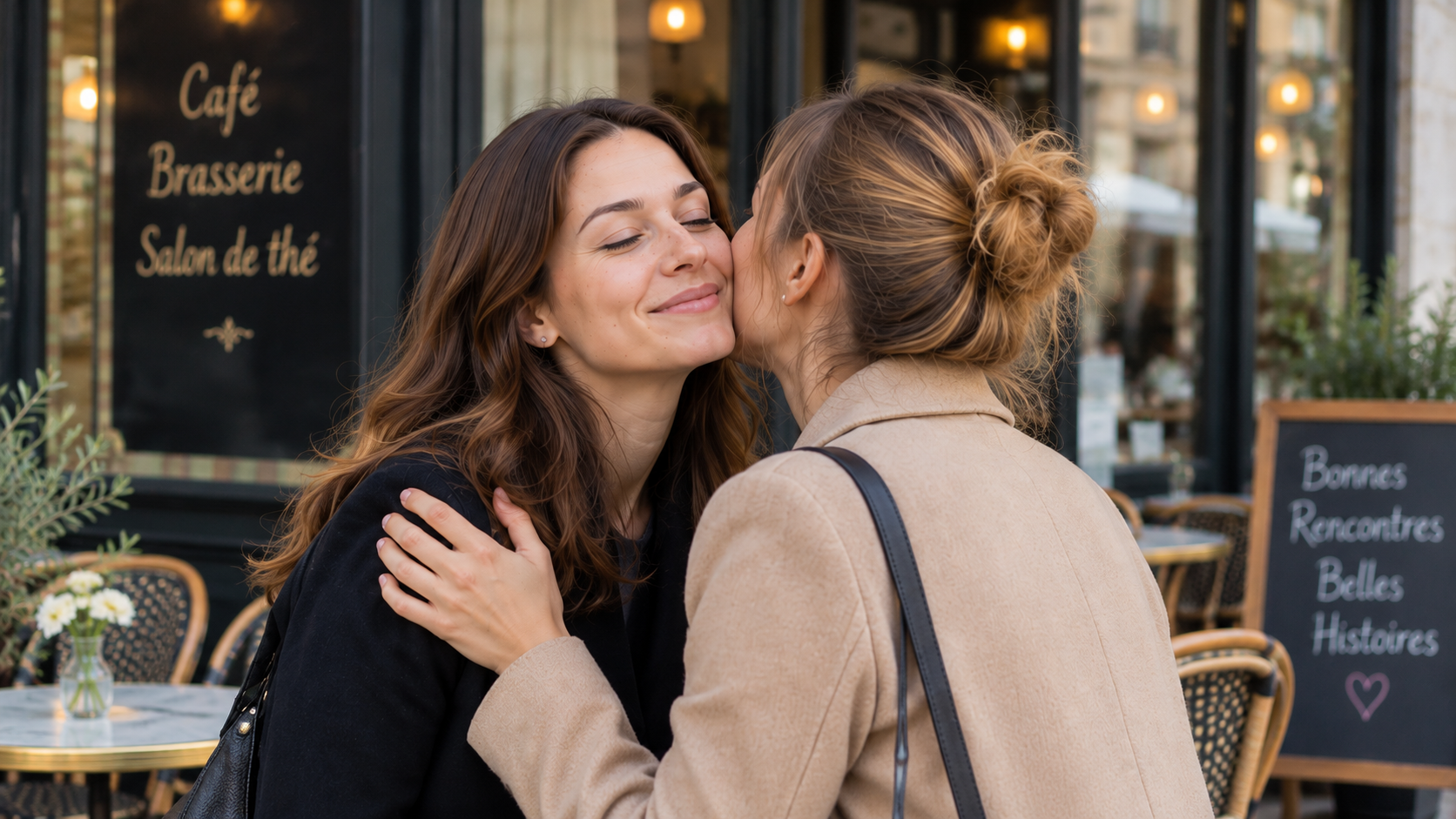
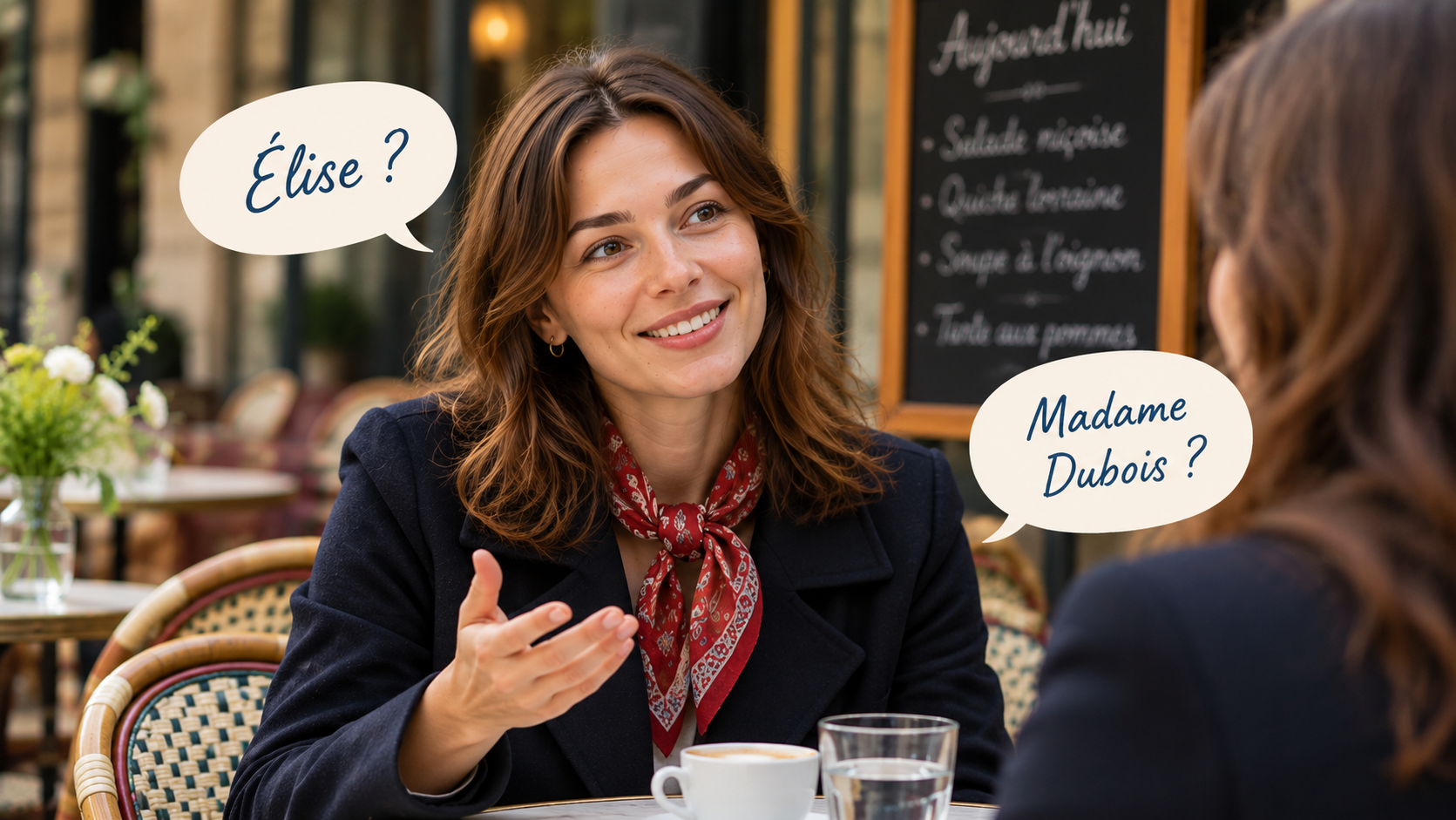
In France, the way people greet each other varies depending on their relationship. Sometimes, simply saying Bonjour(hello) is enough, while in other situations people may shake hands or, among those who know each other well, exchange la bise, a greeting involving cheek-to-cheek contact.
Greetings themselves are also considered an important part of good manners in France. People greet not only friends and family but also others they encounter at work, school, shops, and in many other aspects of everyday life.
For this reason, when learning French, it is important to understand not only the words used for greetings but also the situations in which they are used.
In this article, I will explain how people greet each other in France, from verbal greetings such as Bonjour and Bonsoir to handshakes and la bise, as well as the cultural characteristics associated with these customs.
In France, it is important to greet someone before beginning an interaction. People greet not only family and friends but also colleagues, neighbors, shop staff, and others with whom they may not have a close relationship.
A greeting in France is more than simply exchanging a conventional phrase. It serves to acknowledge the other person and signal the beginning of an interaction. For this reason, even when you have a specific question or request, it is customary to begin with a greeting such as Bonjour before getting to the point.
For example, when entering a small shop or bakery, it is common to say Bonjour. (Hello.) to the staff before beginning to shop.
Even if you want to ask a question, it is more natural to begin with a greeting and say Bonjour, vous avez ce produit ?(Hello, do you have this product?) rather than immediately asking Vous avez ce produit ? (Do you have this product?).
This is because, even in an interaction between a customer and a member of staff, greeting the other person before making a request is considered polite. Such brief greetings are particularly common in situations involving direct interaction with staff, such as in small independent shops and bakeries.
Conversely, immediately asking a question or making a request without first greeting the other person may, depending on the situation, come across as abrupt or unfriendly.
Bonjour is therefore an important expression that signals the beginning of an interaction with another person.
One of the most common everyday greetings in French is Bonjour.
Bonjour is often translated as “hello” or “good afternoon,” but in practice it is used broadly from the morning through the daytime. In English, Good morning is used in the morning and Good afternoon later in the day, whereas in French, Bonjour generally serves as a morning greeting as well.
Therefore, when meeting someone in the morning, you can also greet them by saying Bonjour ! (Good morning! / Hello!).
From the evening onward, Bonsoir ! (Good evening!) is generally used instead.
There is no strictly defined time at which people switch from Bonjour to Bonsoir. The timing can vary depending on the season, the surrounding circumstances, and individual preference.
In situations where greater politeness is appropriate, Madame or Monsieur may also be added, as in Bonjour, Madame ! or Bonjour, Monsieur !
With close friends and family, by contrast, the casual greeting Salut ! (Hi!) is commonly used. Salut is not strongly tied to a particular time of day and can be used both when meeting someone and when saying goodbye, similar to “bye” or “see you.”
However, Salut is more informal than Bonjour or Bonsoir. When speaking to someone for the first time, a member of staff in a shop, or a professional contact, it is generally better to use Bonjour or Bonsoir.
In France, greetings are not limited to words. Handshakes (serrer la main) are also commonly used.
Handshakes may be exchanged in professional situations, when meeting someone for the first time, or when greeting someone with whom you do not have a particularly close relationship. For example, when meeting someone for the first time in a professional setting, you might shake hands while saying Bonjour, enchanté(e). (Hello, nice to meet you.)
However, there is no rule in France that people must always shake hands with professional contacts or whenever they meet someone for the first time. In many situations, people simply say Bonjour without shaking hands. Whether a handshake is appropriate depends on factors such as workplace customs, individual habits, the relationship between the people involved, and age.
One of the best-known aspects of French greeting culture is la bise.
La bise is a greeting in which two people bring their cheeks close together while moving their faces from side to side in a kissing gesture. The lips do not necessarily touch the other person’s cheek; people may simply bring their cheeks close together and make a light kissing sound in the air.
La bise is mainly exchanged among family members, friends, and close acquaintances when meeting or saying goodbye. It may also be exchanged when meeting someone for the first time, for example when being introduced to someone by a mutual acquaintance.
There are also certain general patterns regarding who exchanges la bise. It is relatively common between women and between women and men. Whether men exchange la bise with one another varies depending on factors such as how close they are, family relationships, region, and generation.
The number of kisses and the way la bise is performed also vary by region. In many areas, people exchange two kisses, one on each cheek, while in other regions the custom may involve one, three, or four. The side on which people begin can also vary according to region and individual preference.
As a result, even French people from different regions can occasionally find themselves confused when exchanging la bise if they expect a different number of kisses or move their faces in different directions.
Although la bise is widely known as a characteristic French greeting, the way it is practiced varies according to the relationship between the people involved, region, generation, and situation. Particularly when meeting someone for the first time, it is therefore useful to observe how the other person chooses to greet you and respond accordingly.
Greetings play an important role in everyday communication in France.
The main characteristics can be summarized as follows:
When learning French, understanding not only expressions such as Bonjour but also the situations in which they are used can help deepen your understanding of real-life communication in French.