
#53 French and Philosophy
Izumi Miyajima French Forest
French is the official language of the French Republic and is used in various areas of society, including administration, education, employment, and commerce.
One of the laws that guarantees the use of French in these areas is the Toubon Law (loi Toubon), enacted in 1994.
The Toubon Law establishes requirements for the use of French in a wide range of areas related to everyday life, including product labeling, advertising, and employment-related documents.
The law reflects the principle that, amid the growing influence of foreign languages, particularly English, it is important to maintain the position of French and ensure that people can understand essential information in the French language.
In this article, I will explain the historical background of the Toubon Law, its main provisions, and its role in French society.
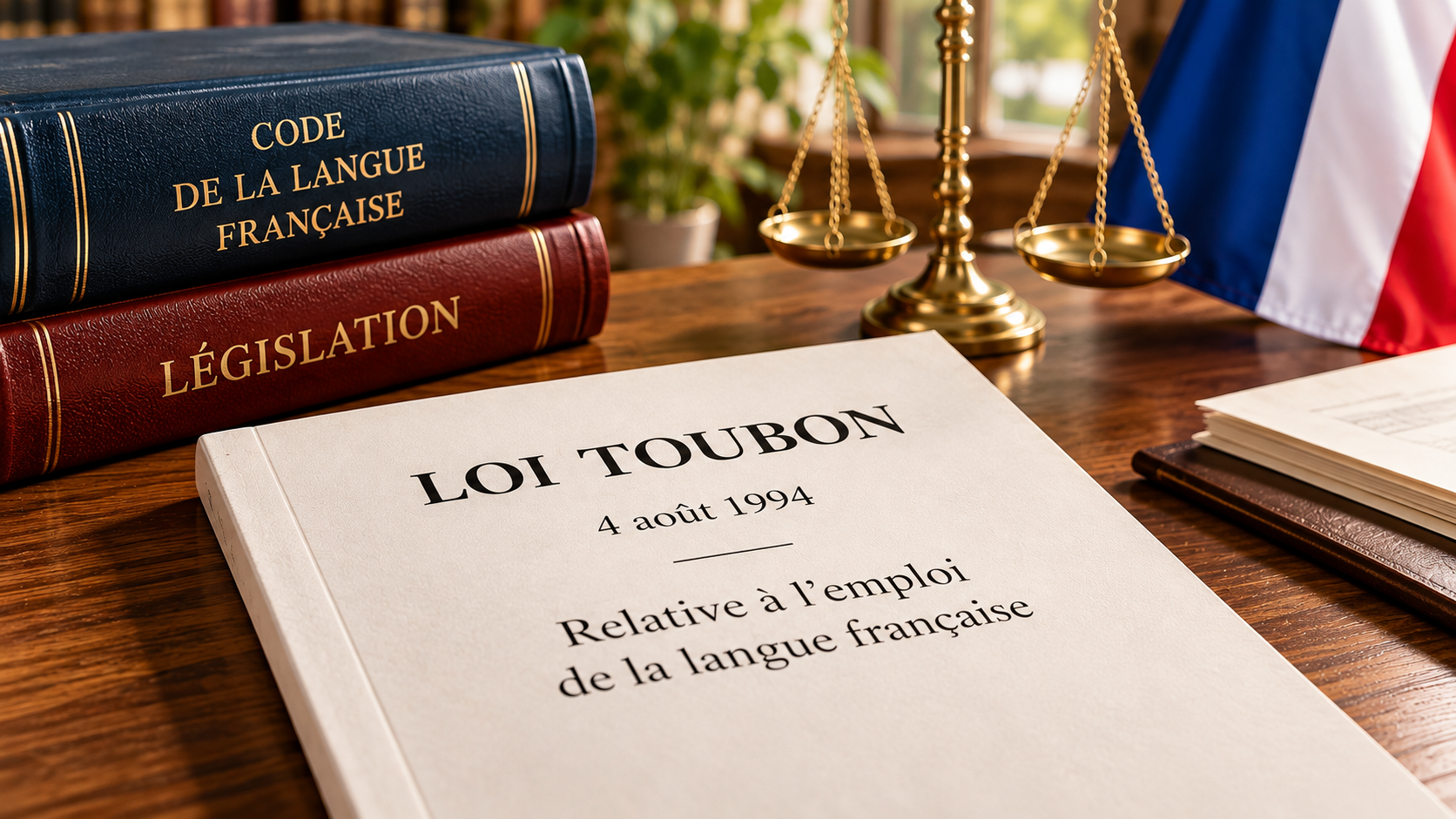
The Toubon Law is a French law concerning the use of the French language, enacted on August 4, 1994.
Its official title is Law No. 94-665 of August 4, 1994, on the Use of the French Language (loi n° 94-665 du 4 août 1994 relative à l’emploi de la langue française).
The law is named after Jacques Toubon, who was serving as Minister of Culture and Francophonie at the time.
Enacted during the presidency of François Mitterrand, the law aims to maintain the position of French in society and guarantee its use in various fields.
Article 1 establishes that French is a fundamental element of France’s identity and cultural heritage.
It also identifies French as the language of education, employment, commercial activities, and public services.
Furthermore, the law explicitly recognizes French as a special link between the countries that constitute the Francophonie.
In this way, the Toubon Law regards French not only as a common language within France but also as an essential element supporting the country’s culture and international connections.
Based on these principles, the law establishes requirements for the use of French in various areas of society, including product labeling, advertising, workplace documents, and information displayed in public places.
A particularly important principle is the creation of an environment in which people can understand information necessary for everyday life in French.
In addition to protecting the cultural value of the French language, the Toubon Law therefore plays an important role in safeguarding the rights of consumers and employees to access essential information.
The Toubon Law was enacted against the background of France’s long-standing language policy, which has sought to protect French and maintain its position in society.
Throughout its history, France has implemented policies aimed at establishing French as a common language of administration and education.
For example, the Ordinance of Villers-Cotterêts, issued by King Francis I in 1539, required the use of French instead of Latin in judicial and administrative documents.
In the second half of the twentieth century, the internationalization of economic activities and advances in information technology increased the influence of English. English-derived words and expressions became widely used in fields such as business, advertising, science, and technology, prompting discussions about the role of French in society.
For example, the following English-derived words are also widely used in modern French:
Against this background, France increasingly emphasized the importance of maintaining an environment in which people could understand essential information in French while remaining open to the influence of foreign languages.
In 1975, the Bas-Lauriol Law (loi Bas-Lauriol) was enacted, establishing requirements for the use of French in areas such as product labeling and advertising.
In 1992, the French Constitution was amended to include the following provision in Article 2: “La langue de la République est le français.”(The language of the Republic shall be French.)
In 1994, the Toubon Law was enacted to develop the legal framework governing the use of French in accordance with this constitutional principle.
One of the main characteristics of the Toubon Law is its requirement that information about products and services be provided in French.
Article 2 establishes requirements for the use of French in matters such as the designation and description of goods and services, instructions for use, warranty conditions, invoices, and receipts.
For example, instruction manuals for electrical appliances sold in France, directions for using cosmetics, and product warranty conditions must be presented in a way that allows consumers to understand the information in French.
The law may also apply to printed advertisements in newspapers and magazines, radio and television advertisements, and advertisements distributed online. Where applicable, information must be provided in French.
For example, if a company uses an English slogan in an advertisement and that slogan communicates information about the characteristics of a product or the nature of a service, a French explanation or translation must also be provided.
However, the use of foreign languages is not universally prohibited.
French may be displayed alongside foreign languages. The law requires French-language information to be presented in a manner that is equally readable, audible, and comprehensible.
For example, when a French translation accompanies English advertising text, the French text must also be displayed in a sufficiently legible size and position.
Trademarks and brand names may be subject to different rules from those governing ordinary product descriptions and advertising statements.
Thus, the Toubon Law allows businesses to use foreign languages while ensuring that consumers can understand essential information about products and services in French.
The Toubon Law also applies to signs and information displayed in public places.
Article 3 establishes requirements for the use of French in signs and announcements displayed on roads, in public facilities, in places accessible to the general public, and on public transportation.
For example, information for users at railway stations, airports, roads, and public facilities is provided in French. This includes instructions for using facilities, transportation information, and safety notices.
In areas frequently visited by tourists, it is also common for information to be displayed in English and other foreign languages alongside French. At railway stations and airports, for example, translations may accompany French-language signs to provide essential information to international travelers.
Furthermore, the Toubon Law stipulates that when public authorities or organizations responsible for public services provide foreign-language translations of signs and announcements, they must, in principle, use at least two foreign languages.
This provision encourages the availability of information in multiple languages rather than relying exclusively on a single foreign language such as English.
In this way, public spaces in France use French as the common national language while also providing multilingual information for international travelers and speakers of other languages.
The Toubon Law also has significant implications for employment in France.
One particularly important requirement concerns documents that impose obligations on employees or contain information necessary for performing their work. Such documents must generally be provided in French.
Examples include:
Providing these documents in French helps ensure that employees can accurately understand their professional obligations and the information necessary for their work.
French labor law also requires written employment contracts to be drafted in French. Provisions are also established for providing translations of written employment contracts into the language of foreign employees.
However, legal exceptions apply to documents received from abroad and documents intended for foreign nationals.
Many multinational companies operate in France, and English is sometimes used in internal meetings and communications with overseas offices.
Nevertheless, even in such companies, important documents directly related to employees’ work may need to be provided in French.
For example, if the French subsidiary of a foreign company uses an English-language operations manual, a French version may be required when the document contains instructions necessary for employees to perform their duties.
In this way, the Toubon Law helps guarantee an environment in which employees can understand their rights, obligations, and essential work-related information in French, even as business activities become increasingly international.
The Toubon Law also establishes French as the principal language used in education and public services.
In education, the current French Education Code provides that French is, in principle, the language used for teaching, examinations, and academic theses in schools and universities.
This principle aims to create an environment in which students can acquire knowledge and participate in learning and research through a common language.
However, legal exceptions exist for foreign-language and regional-language instruction, as well as certain educational programs authorized to use other languages.
For example, universities may offer courses taught in English under specified conditions.
French is also generally used in official documents prepared by public authorities, contracts concluded by administrative bodies, and the provision of public services.
In particular, the Toubon Law establishes the principle that contracts concluded by public authorities and certain other public bodies must be drafted in French.
However, legal exceptions may apply depending on the nature of the contract and the parties involved.
The Toubon Law is also an interesting example of how language is regarded in French society.
Throughout French history, the French language has been closely associated with developments in literature, art, philosophy, and political thought.
As a result, French is regarded not merely as a means of communication but also as an important symbol of the country’s history and culture.
France has a long tradition of emphasizing linguistic accuracy and richness of expression.
The Académie française, established in 1635, has played a role in establishing standards for the French language through activities such as compiling dictionaries and making recommendations concerning vocabulary and usage.
Against this historical background, maintaining the French language and passing it on to future generations are regarded as important objectives of cultural policy.
At the same time, French has cultural significance while also serving as a common language that enables people to participate in society.
For example, access to information in an understandable language is essential for obtaining accurate product information, understanding employment contracts, and using public services.
The Toubon Law therefore also has the function of protecting the rights of consumers and employees by ensuring that information necessary for everyday life is available in French.
In other words, the Toubon Law is a legal framework designed to preserve the role of French as a common language of society while recognizing its importance as part of France’s cultural heritage.
The Toubon Law, enacted in 1994, is a French law designed to guarantee the use of the French language in various areas of society.
Its main characteristics can be summarized as follows:
In this way, the Toubon Law aims both to protect French as part of the country’s cultural heritage and to establish an environment in which people can access information necessary for everyday life in French.
The law can therefore be regarded as a symbol of French language policy, reflecting the country’s commitment to maintaining French as a common national language while protecting the rights of consumers and employees.